
Lines and texture
Discuss fine lines, crepey-looking skin and changes associated with sun exposure. The depth and cause of a line affect what treatment may achieve.

COOL BLEPH at luma
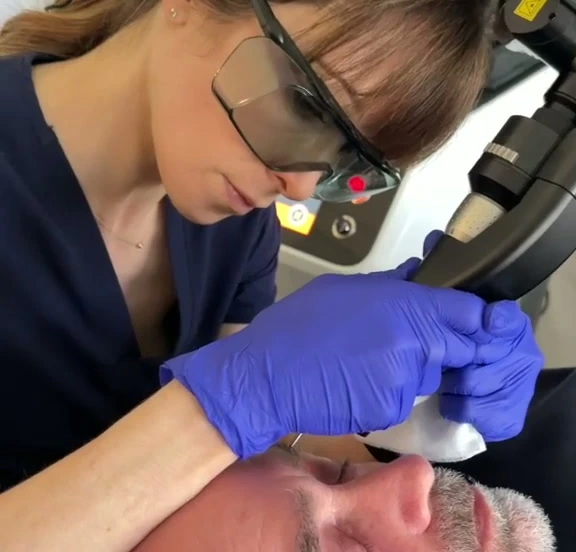
For fine lines and changes in eyelid skin texture, COOL BLEPH uses the Asclepion Dermablate erbium laser to resurface selected skin around the eyes. It treats skin, with healing time to plan for.
Fine lines and thin, crepey-looking texture can change how the skin around your eyes looks. Laser resurfacing may help soften selected skin-surface lines and improve the look of texture. An assessment helps identify whether skin resurfacing fits your concern.
Discuss fine lines, crepey-looking skin and changes associated with sun exposure. The depth and cause of a line affect what treatment may achieve.
Your assessment can include upper lids, lower lids and nearby skin. Each area needs individual evaluation. The COOL BLEPH fee includes upper and lower eyelid treatment.
Blepharoplasty is eyelid surgery. Depending on the operation, it may remove or reposition skin or fat. COOL BLEPH is sometimes described as “nonsurgical laser blepharoplasty,” but luma's service is eyelid skin resurfacing.
This treatment does not remove fat bags, correct a drooping eyelid, or correct vision problems. It cannot be relied on to correct hooding, and it does not provide the same result as surgery. Bags and dark circles can have causes that skin resurfacing will not address.
If your main concern is a drooping lid, substantial excess skin or a lid affecting your vision, discuss that before choosing a cosmetic skin treatment. Another medical or surgical assessment may be more appropriate.
COOL BLEPH is an eyelid treatment approach using Asclepion's Dermablate Er:YAG, an erbium laser. The laser's energy interacts with water in the skin to remove controlled amounts of skin tissue. This is called ablative resurfacing: the treated surface needs to heal.
Nonsurgical means this is a skin-resurfacing treatment rather than an eyelid operation. It does not mean the skin is left untouched, that treatment is painless, or that there is no recovery. The area and extent of resurfacing are part of an individual treatment plan.
The skin around the eyes needs careful assessment. Bring your goals and questions, and tell your provider about:
Skin tone and a history of darker or lighter patches matter. Laser resurfacing can cause these changes, so suitability and treatment intensity need individual review. An assessment may lead to a different treatment, a delay, or no laser treatment.
Laser treatment near the eyes requires eye protection appropriate to the area and procedure. Ask your provider to explain the eye protection required for your treatment and how it will be used. Protection and careful technique do not remove all risk of eye injury.
Before proceeding, discuss the recommended area, likely benefits, alternatives, risks and recovery with your provider. Ask how discomfort will be managed and how much time to allow for your visit. The number of treatments and any reassessment should be based on your plan and response.
Get preparation instructions for your own skin and eye history. Review medications, skin care and contact-lens use with the clinic rather than making changes on your own. Make sure you understand the aftercare and follow-up plan before treatment.
Redness, swelling, tenderness, crusting or oozing can occur after ablative resurfacing. How much recovery you need depends on the area treated, the extent of resurfacing and your healing response. Plan work and events around the recovery discussed at assessment.
The surface can heal before redness has fully settled. Ask about both the initial healing period and how long the area may look visibly treated.
Ask when you can resume makeup, your usual skin products, contact lenses and exercise. These decisions depend on your treatment and how the area is healing.
Follow the clinic's aftercare instructions, use gentle skin care, avoid picking or scratching, and protect healing skin from the sun as directed. Your provider should explain which products are appropriate near your eyes.
Contact the clinic for increasing pain, spreading redness, drainage that looks like pus, significant swelling, eye symptoms or unexpected concerns. Before treatment, confirm whom to contact for urgent concerns and outside clinic hours. You can reach luma at (403) 214-0074.
The aim is an improvement in selected skin lines and texture. The degree of change varies, and some concerns may respond incompletely or not at all. Laser resurfacing does not stop skin ageing or replace an assessment of eyelid structure.
Alongside temporary discomfort and swelling, risks include prolonged redness or healing, infection, a cold-sore flare-up, darker or lighter skin patches, small bumps, changes in texture and scarring. Eye-area treatment also requires discussion of possible eye injury and changes in eyelid position.
Your provider should explain which risks are most relevant to you and how they affect the recommendation. There is no guaranteed result or fixed duration of benefit.
Fees are in Canadian dollars, plus GST:
Your consultation confirms suitability and your treatment plan. Platelet-rich fibrin (PRF) is an optional addition at an additional cost.
To discuss COOL BLEPH at luma in Calgary, contact the clinic about eyelid resurfacing. The team can help arrange the appropriate assessment and explain next steps.
It is a skin treatment with a different scope. It may help selected surface lines and texture, but it does not remove fat or repair a drooping eyelid. If excess skin, lid position or vision is your main concern, another assessment may be needed.
Discuss the area that concerns you at assessment. Upper lids, lower lids and surrounding skin need individual evaluation. The COOL BLEPH fee of $1,599 + GST includes upper and lower eyelid treatment and a take-home care kit.
No. COOL BLEPH is the treatment name. Ablative resurfacing removes skin tissue, so healing is required and discomfort can occur. Discuss comfort measures and recovery before choosing a treatment date.
Follow the clinic's instructions for your treatment and healing progress. Surface healing, swelling and redness do not always resolve together, so a general timeline cannot tell you when makeup is appropriate for your skin.
Suitability needs individual assessment. Skin tone, a history of darker or lighter patches, eye health and healing history all matter. Resurfacing can cause changes in skin colour, and the safest recommendation for you may be a different approach.